参数资料
| 型号: | HIP6012CB |
| 厂商: | Intersil |
| 文件页数: | 7/12页 |
| 文件大小: | 0K |
| 描述: | IC CTRLR PWM SYNC BUCK 14-SOIC |
| 标准包装: | 50 |
| 应用: | 控制器,Intel Pentium? Pro、PowerP、Alpha |
| 输入电压: | 5V,12V |
| 输出数: | 1 |
| 输出电压: | 1.3 V ~ 12 V |
| 工作温度: | 0°C ~ 70°C |
| 安装类型: | * |
| 封装/外壳: | 14-SOIC(0.154",3.90mm 宽) |
| 供应商设备封装: | * |
| 包装: | 管件 |
HIP6012
V IN
5. Place 2 ND Pole at Half the Switching Frequency
OSC
DRIVER
6. Check Gain against Error Amplifier’s Open-Loop Gain
? V OSC
PWM
COMPARATOR
-
+
DRIVER
L O
PHASE
C O
ESR
(PARASITIC)
V OUT
7. Estimate Phase Margin - Repeat if Necessary
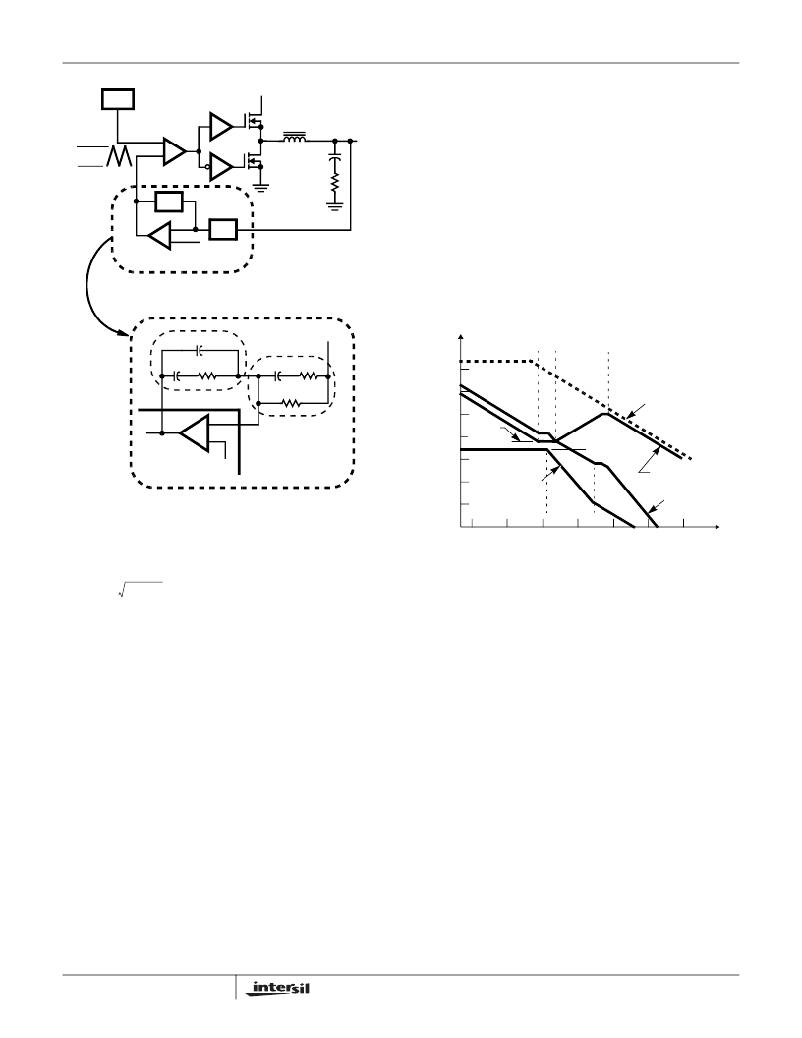
Figure 8 shows an asymptotic plot of the DC-DC converter’s
gain vs frequency. The actual Modulator Gain has a high gain
peak do to the high Q factor of the output filter and is not shown
in Figure 8. Using the above guidelines should give a
V E/A
Z FB
Compensation Gain similar to the curve plotted. The open loop
error amplifier gain bounds the compensation gain. Check the
-
+
ERROR
AMP
Z IN
REFERENCE
compensation gain at F P2 with the capabilities of the error
amplifier. The Closed Loop Gain is constructed on the log-log
graph of Figure 8 by adding the Modulator Gain (in dB) to the
Compensation Gain (in dB). This is equivalent to multiplying the
DETAILED COMPENSATION COMPONENTS
modulator transfer function to the compensation transfer
function and plotting the gain.
C1
C2
R2
Z FB
C3
Z IN
R3
V OUT
100
80
F Z1 F Z2
F P1
F P2
COMP
-
FB
R1
60
40
20LOG
OPEN LOOP
ERROR AMP GAIN
+
20
(R2/R1)
20LOG
HIP6012
REF
0
-20
MODULATOR
(V IN / ? V OSC )
COMPENSATION
GAIN
FIGURE 7. VOLTAGE - MODE BUCK CONVERTER
COMPENSATION DESIGN
-40
-60
10
100
GAIN
1K
F LC
10K
F ESR
100K
1M
CLOSED LOOP
GAIN
10M
Modulator Break Frequency Equations
FREQUENCY (Hz)
F LC = ---------------------------------------
F ESR = ---------------------------------------------
1
2 π ? L O ? C O
1
2 π ? ( ESR ? C O )
FIGURE 8. ASYMPTOTIC BODE PLOT OF CONVERTER GAIN
The compensation gain uses external impedance networks
The compensation network consists of the error amplifier
(internal to the HIP6012) and the impedance networks Z IN
and Z FB . The goal of the compensation network is to provide
a closed loop transfer function with the highest 0dB crossing
frequency (f 0dB ) and adequate phase margin. Phase margin
is the difference between the closed loop phase at f 0dB and
180 o . The equations below relate the compensation
network’s poles, zeros and gain to the components (R1, R2,
R3, C1, C2, and C3) in Figure 8. Use these guidelines for
locating the poles and zeros of the compensation network:
Compensation Break Frequency Equations
Z FB and Z IN to provide a stable, high bandwidth (BW) overall
loop. A stable control loop has a gain crossing with
-20dB/decade slope and a phase margin greater than 45 o .
Include worst case component variations when determining
phase margin.
Component Selection Guidelines
Output Capacitor Selection
An output capacitor is required to filter the output and supply
the load transient current. The filtering requirements are a
function of the switching frequency and the ripple current.
F Z1 = ----------------------------------
F P1 = -------------------------------------------------------
2 π ? R2 ? ? ---------------------- ?
F Z2 = ------------------------------------------------------
F P2 = ----------------------------------
1
2 π ? R 2 ? C1
1
2 π ? ( R1 + R3 ) ? C3
1
C1 ? C2
? C1 + C2 ?
1
2 π ? R3 ? C3
The load transient requirements are a function of the slew
rate (di/dt) and the magnitude of the transient load current.
These requirements are generally met with a mix of
capacitors and careful layout.
1. Pick Gain (R2/R1) for desired converter bandwidth
2. Place 1 ST Zero Below Filter’s Double Pole
(~75% F LC )
3. Place 2 ND Zero at Filter’s Double Pole
4. Place 1 ST Pole at the ESR Zero
7
Modern microprocessors produce transient load rates above
1A/ns. High frequency capacitors initially supply the transient
and slow the current load rate seen by the bulk capacitors.
The bulk filter capacitor values are generally determined by
the ESR (effective series resistance) and voltage rating
requirements rather than actual capacitance requirements.
FN4324.2
December 27, 2004
相关PDF资料 |
PDF描述 |
|---|---|
| MCP1700T-2902E/TT | IC REG LDO 2.9V .25A SOT-23-3 |
| RMC19DRTI-S93 | CONN EDGECARD 38POS DIP .100 SLD |
| MCP1700T-2902E/MB | IC REG LDO 2.9V .25A SOT-89-3 |
| HBC26DRYN-S93 | CONN EDGECARD 52POS DIP .100 SLD |
| MCP1700T-2802E/TT | IC REG LDO 2.8V .25A SOT-23-3 |
相关代理商/技术参数 |
参数描述 |
|---|---|
| HIP6012CBS2462 | 制造商:Rochester Electronics LLC 功能描述:- Bulk |
| HIP6012CB-T | 功能描述:IC CTRLR PWM SYNC BUCK 14-SOIC RoHS:否 类别:集成电路 (IC) >> PMIC - 稳压器 - 专用型 系列:- 产品培训模块:Lead (SnPb) Finish for COTS Obsolescence Mitigation Program 标准包装:2,000 系列:- 应用:电源,ICERA E400,E450 输入电压:4.1 V ~ 5.5 V 输出数:10 输出电压:可编程 工作温度:-40°C ~ 85°C 安装类型:表面贴装 封装/外壳:42-WFBGA,WLCSP 供应商设备封装:42-WLP 包装:带卷 (TR) |
| HIP6012CBZ | 功能描述:电压模式 PWM 控制器 SYNC BUCK PWM/1 5%/14 RoHS:否 制造商:Texas Instruments 输出端数量:1 拓扑结构:Buck 输出电压:34 V 输出电流: 开关频率: 工作电源电压:4.5 V to 5.5 V 电源电流:600 uA 最大工作温度:+ 125 C 最小工作温度:- 40 C 封装 / 箱体:WSON-8 封装:Reel |
| HIP6012CBZ-T | 功能描述:电压模式 PWM 控制器 SYNC BUCK PWM/1 5%/14 RoHS:否 制造商:Texas Instruments 输出端数量:1 拓扑结构:Buck 输出电压:34 V 输出电流: 开关频率: 工作电源电压:4.5 V to 5.5 V 电源电流:600 uA 最大工作温度:+ 125 C 最小工作温度:- 40 C 封装 / 箱体:WSON-8 封装:Reel |
| HIP6012CV | 功能描述:IC CTRLR PWM SYNC BUCK 14-TSSOP RoHS:否 类别:集成电路 (IC) >> PMIC - 稳压器 - 专用型 系列:- 产品培训模块:Lead (SnPb) Finish for COTS Obsolescence Mitigation Program 标准包装:2,000 系列:- 应用:电源,ICERA E400,E450 输入电压:4.1 V ~ 5.5 V 输出数:10 输出电压:可编程 工作温度:-40°C ~ 85°C 安装类型:表面贴装 封装/外壳:42-WFBGA,WLCSP 供应商设备封装:42-WLP 包装:带卷 (TR) |
发布紧急采购,3分钟左右您将得到回复。