- 您现在的位置:买卖IC网 > PDF目录10253 > AD7934BRUZ-6 (Analog Devices Inc)IC ADC 12BIT 4CH 625KSPS 28TSSOP PDF资料下载
参数资料
| 型号: | AD7934BRUZ-6 |
| 厂商: | Analog Devices Inc |
| 文件页数: | 13/32页 |
| 文件大小: | 0K |
| 描述: | IC ADC 12BIT 4CH 625KSPS 28TSSOP |
| 标准包装: | 50 |
| 位数: | 12 |
| 采样率(每秒): | 625k |
| 数据接口: | 并联 |
| 转换器数目: | 1 |
| 功率耗散(最大): | 13.5mW |
| 电压电源: | 单电源 |
| 工作温度: | -40°C ~ 85°C |
| 安装类型: | 表面贴装 |
| 封装/外壳: | 28-TSSOP(0.173",4.40mm 宽) |
| 供应商设备封装: | 28-TSSOP |
| 包装: | 管件 |
| 输入数目和类型: | 4 个单端,单极;2 个差分,单极;2 个伪差分,单极 |
第1页第2页第3页第4页第5页第6页第7页第8页第9页第10页第11页第12页当前第13页第14页第15页第16页第17页第18页第19页第20页第21页第22页第23页第24页第25页第26页第27页第28页第29页第30页第31页第32页
AD7933/AD7934
Rev. B | Page 20 of 32
VREF
p-p
VIN+
VIN–
VREF
p-p
*ADDITIONAL PINS OMITTED FOR CLARITY.
AD7933/
AD7934*
COMMON-MODE
VOLTAGE
0
37
13-
03
2
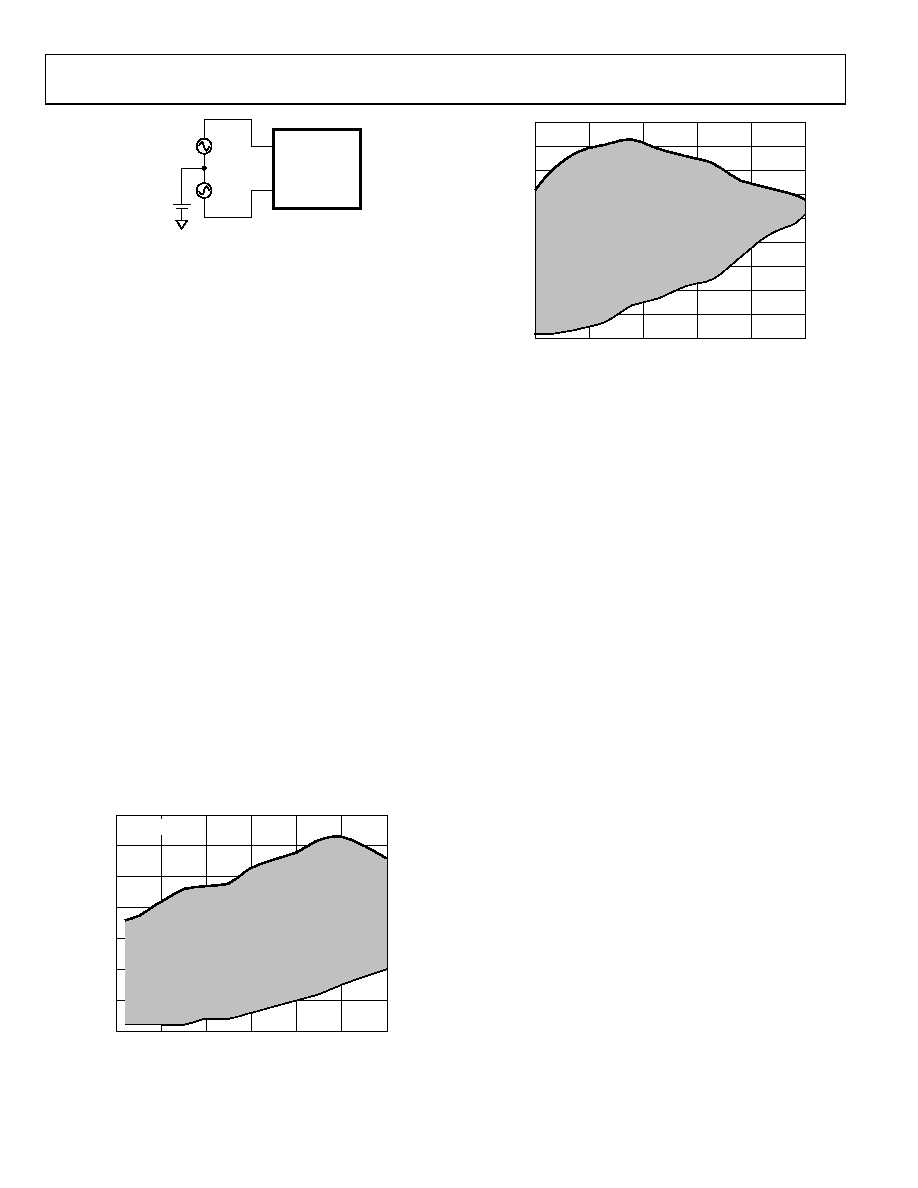
Figure 24. Differential Input Definition
The amplitude of the differential signal is the difference
between the signals applied to the VIN+ and VIN pins in each
differential pair (that is, VIN+ VIN). VIN+ and VIN should be
simultaneously driven by two signals, each of amplitude
VREF (or 2 × VREF depending on the range chosen) that are
180° out of phase. The amplitude of the differential signal is,
therefore, VREF to +VREF peak-to-peak (that is, 2 × VREF). This is
regardless of the common mode (CM). The common mode is
the average of the two signals (that is (VIN+ + VIN)/2) and is,
therefore, the voltage on which the two inputs are centered.
This results in the span of each input being CM ± VREF/2. This
voltage has to be set up externally and its range varies with the
reference value, VREF. As the value of VREF increases, the
common-mode range decreases. When driving the inputs with
an amplifier, the actual common-mode range is determined by
the output voltage swing of the amplifier.
typically varies with VREF for a 5 V power supply using the 0 V
to VREF range or 2 × VREF range, respectively. The common
mode must be in this range to guarantee the functionality of the
AD7933/AD7934.
When a conversion takes place, the common mode is rejected,
resulting in a virtually noise-free signal of amplitude VREF to
+VREF corresponding to the digital codes of 0 to 1024 for the
AD7933, and 0 to 4096 for the AD7934. If the 2 × VREF range is
used, the input signal amplitude extends from 2 VREF to
+2 VREF.
VREF (V)
CO
M
O
N
-M
O
DE
RA
NG
E
(
V
)
3.5
3.0
2.0
1.5
2.5
1.0
0.5
0
00.5
1.5
1.0
2.0
2.5
3.0
TA = 25°C
03
71
3-
03
3
Figure 25. Input Common-Mode Range vs. VREF
(0 V to VREF Range, VDD = 5 V)
VREF (V)
CO
M
O
N
-M
O
DE
RA
NG
E
(
V
)
4.5
4.0
3.0
1.5
2.0
2.5
3.5
1.0
0.5
0
0.1
0.6
1.6
1.1
2.1
2.6
TA = 25°C
03
71
3-
03
4
Figure 26. Input Common-Mode Range vs. VREF
(2 × VREF Range, VDD = 5 V)
Driving Differential Inputs
Differential operation requires that VIN+ and VIN be simultane-
ously driven with two equal signals that are 180° out of phase.
The common mode must be set up externally and has a range
that is determined by VREF, the power supply, and the particular
amplifier used to drive the analog inputs. Differential modes of
operation with either an ac or dc input provide the best THD
performance over a wide frequency range. Since not all applica-
tions have a signal preconditioned for differential operation,
there is often a need to perform single-ended-to-differential
conversion.
Using an Op Amp Pair
An op amp pair can be used to directly couple a differential
signal to one of the analog input pairs of the AD7933/AD7934.
show how a dual op amp converts a single-ended signal into a
differential signal for both a bipolar and unipolar input signal,
respectively.
The voltage applied to Point A sets up the common-mode
voltage. In both diagrams, it is connected in some way to the
reference, but any value in the common-mode range can be
input here to set up the common mode. The AD8022 is a
suitable dual op amp that can be used in this configuration to
provide differential drive to the AD7933/AD7934.
Take care when choosing the op amp; the selection depends on
the required power supply and system performance objectives.
dc coupling applications requiring best distortion performance.
The circuit configuration shown in Figure 27 is configured to
convert and level shift a single-ended, ground-referenced
(bipolar) signal to a differential signal centered at the VREF level
of the ADC.
The circuit in Figure 28 converts a unipolar, single-ended signal
into a differential signal.
相关PDF资料 |
PDF描述 |
|---|---|
| MS27505E9B44P | CONN RCPT 4POS BOX MNT W/PINS |
| MS27467E9F98P | CONN PLUG 3POS STRAIGHT W/PINS |
| MS3106F22-1S | CONN PLUG 2POS STRAIGHT W/SCKT |
| MS27513E18B32PA | CONN RCPT 32POS BOX MNT W/PINS |
| MS27468T11F35SD | CONN RCPT 13POS JAM NUT W/SCKT |
相关代理商/技术参数 |
参数描述 |
|---|---|
| AD7934BRUZ-6REEL7 | 功能描述:IC ADC 12BIT 4CH 625KSPS 28TSSOP RoHS:是 类别:集成电路 (IC) >> 数据采集 - 模数转换器 系列:- 标准包装:1,000 系列:- 位数:16 采样率(每秒):45k 数据接口:串行 转换器数目:2 功率耗散(最大):315mW 电压电源:模拟和数字 工作温度:0°C ~ 70°C 安装类型:表面贴装 封装/外壳:28-SOIC(0.295",7.50mm 宽) 供应商设备封装:28-SOIC W 包装:带卷 (TR) 输入数目和类型:2 个单端,单极 |
| AD7934BRUZ-REEL7 | 功能描述:IC ADC 12BIT 4CH 1.5MSPS 28TSSOP RoHS:是 类别:集成电路 (IC) >> 数据采集 - 模数转换器 系列:- 标准包装:1,000 系列:- 位数:16 采样率(每秒):45k 数据接口:串行 转换器数目:2 功率耗散(最大):315mW 电压电源:模拟和数字 工作温度:0°C ~ 70°C 安装类型:表面贴装 封装/外壳:28-SOIC(0.295",7.50mm 宽) 供应商设备封装:28-SOIC W 包装:带卷 (TR) 输入数目和类型:2 个单端,单极 |
| AD7937 | 制造商:AD 制造商全称:Analog Devices 功能描述:LC2MOS 8+4 Loading Dual 12-Bit DAC |
| AD7937AR | 功能描述:IC DAC 12BIT DUAL 8+4 24-SOIC RoHS:否 类别:集成电路 (IC) >> 数据采集 - 数模转换器 系列:- 标准包装:2,400 系列:- 设置时间:- 位数:18 数据接口:串行 转换器数目:3 电压电源:模拟和数字 功率耗散(最大):- 工作温度:-40°C ~ 85°C 安装类型:表面贴装 封装/外壳:36-TFBGA 供应商设备封装:36-TFBGA 包装:带卷 (TR) 输出数目和类型:* 采样率(每秒):* |
| AD7937AR-REEL | 功能描述:IC DAC 12BIT DUAL 8+4 24-SOIC RoHS:否 类别:集成电路 (IC) >> 数据采集 - 数模转换器 系列:- 标准包装:2,400 系列:- 设置时间:- 位数:18 数据接口:串行 转换器数目:3 电压电源:模拟和数字 功率耗散(最大):- 工作温度:-40°C ~ 85°C 安装类型:表面贴装 封装/外壳:36-TFBGA 供应商设备封装:36-TFBGA 包装:带卷 (TR) 输出数目和类型:* 采样率(每秒):* |
发布紧急采购,3分钟左右您将得到回复。