- 您现在的位置:买卖IC网 > PDF目录18722 > SI4136-EVB (Silicon Laboratories Inc)BOARD EVALUATION FOR SI4136 PDF资料下载
参数资料
| 型号: | SI4136-EVB |
| 厂商: | Silicon Laboratories Inc |
| 文件页数: | 9/34页 |
| 文件大小: | 0K |
| 描述: | BOARD EVALUATION FOR SI4136 |
| 标准包装: | 1 |
| 类型: | 频率合成器 |
| 频率: | 2.3GHz ~ 2.5GHz,2.025GHz ~ 2.3GHz |
| 适用于相关产品: | SI4136 |
| 已供物品: | 板,CD |
| 产品目录页面: | 585 (CN2011-ZH PDF) |
| 其它名称: | 336-1558 SI4136-EVB-ND |
第1页第2页第3页第4页第5页第6页第7页第8页当前第9页第10页第11页第12页第13页第14页第15页第16页第17页第18页第19页第20页第21页第22页第23页第24页第25页第26页第27页第28页第29页第30页第31页第32页第33页第34页
Si4136/Si4126
Rev. 1.41
17
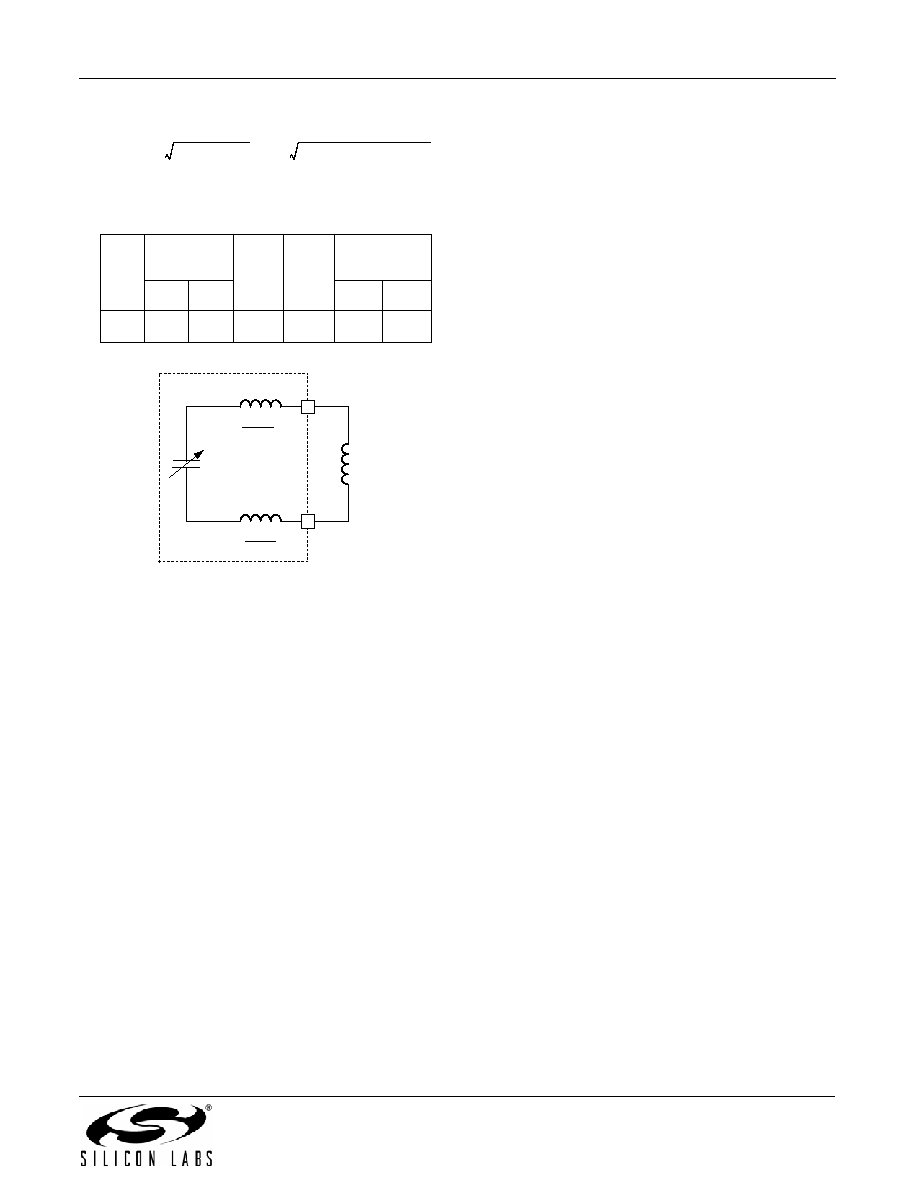
Table 6 summarizes the characteristics of the IF VCO.
Figure 14. Example of IF External Inductor
As
a
design
example,
suppose
synthesizing
frequencies in a 30 MHz band between 735 MHz and
765 MHz is desired. The center frequency should be
defined as midway between the two extremes, or
750 MHz. The PLL will be able to adjust the VCO output
frequency ±5% of the center frequency, or ±37.5 MHz of
750 MHz
(i.e.,
from
approximately
713 MHz
to
788 MHz). The IF VCO has a CNOM of 6.5 pF, and a
6.9 nH inductance (correct to two digits) in parallel with
this capacitance will yield the desired center frequency.
An external inductance of 4.8 nH should be connected
between IFLA and IFLB, as shown in Figure 14. This, in
addition to 2.1 nH of package inductance, will present
the
correct
total
inductance
to
the
VCO.
In
manufacturing, the external inductance can vary ±10%
of its nominal value and the Si4136 will correct for the
variation with the self-tuning algorithm.
For more information on designing the external trace
inductor, please refer to Application Note 31.
2.3. Self-Tuning Algorithm
The
self-tuning
algorithm
is
initiated
immediately
following power-up of a PLL or, if the PLL is already
powered, following a change in its programmed output
frequency. This algorithm attempts to tune the VCO so
that its free-running frequency is near the desired output
frequency. In so doing, the algorithm will compensate
for manufacturing tolerance errors in the value of the
external inductance connected to the IF VCO. It will also
reduce the frequency error for which the PLL must
correct to get the precise desired output frequency. The
self-tuning algorithm will leave the VCO oscillating at a
frequency in error by somewhat less than 1% of the
desired output frequency.
After self-tuning, the PLL controls the VCO oscillation
frequency. The PLL will complete frequency locking,
eliminating any remaining frequency error. Thereafter, it
will maintain frequency-lock, compensating for effects
caused by temperature and supply voltage variations.
The Si4136’s self-tuning algorithm will compensate for
component value errors at any temperature within the
specified temperature range. However, the ability of the
PLL to compensate for drift in component values that
occur
after
self-tuning
is
limited.
For
external
inductances with temperature coefficients around ±150
ppm/°C, the PLL will be able to maintain lock for
changes in temperature of approximately ±30°C.
Applications where the PLL is regularly powered-down
or the frequency is periodically reprogrammed minimize
or eliminate the potential effects of temperature drift
because the VCO is re-tuned in either case. In
applications where the ambient temperature can drift
substantially after self-tuning, it may be necessary to
monitor the lock-detect bar (LDETB) signal on the
AUXOUT pin to determine whether a PLL is about to
run out of locking capability. (See “2.9. Auxiliary Output
(AUXOUT)” for how to select LDETB.) The LDETB
signal will be low after self-tuning has completed but will
rise when either the IF or RF PLL nears the limit of its
compensation range. (LDETB will also be high when
either PLL is executing the self-tuning algorithm.) The
output frequency will still be locked when LDETB goes
high, but the PLL will eventually lose lock if the
temperature continues to drift in the same direction.
Therefore, if LDETB goes high both the IF and RF PLLs
should promptly be re-tuned by initiating the self-tuning
algorithm.
2.4. Output Frequencies
The IF and RF output frequencies are set by
programming the R- and N-Divider registers. Each PLL
has its own R and N registers so that each can be
Table 6. Si4136-BT/GT VCO Characteristics
VCO
Fcen Range
(MHz)
Cnom
(pF)
Lpkg
(nH)
Lext Range
(nH)
Min
Max
Min
Max
IF
526
952
6.5
2.1
2.2
12.0
f
CEN
1
2
L
TOT
C
NOM
---------------------------------------------
1
2
L
PKG
L
EXT
+
C
NOM
----------------------------------------------------------------------
==
Si4136
L
PKG
2
L
PKG
2
L
EXT
IFLB
IFLA
相关PDF资料 |
PDF描述 |
|---|---|
| SI4133M-EVB | BOARD EVALUATION FOR SI4133 |
| SI4133-EVB | BOARD EVALUATION FOR SI4133 |
| LM113-200.0M | OSC 200.0000 MHZ 3.3V LVDS |
| TC32M6A32K7680 | OSCILLATOR 32.7680 KHZ 1.8V SMD |
| CGH40010F-TB | BOARD DEMO AMP CIRCUIT CGH40010 |
相关代理商/技术参数 |
参数描述 |
|---|---|
| SI4136-F-BM | 功能描述:射频无线杂项 WLAN Sat Radio Synthesizer RoHS:否 制造商:Texas Instruments 工作频率:112 kHz to 205 kHz 电源电压-最大:3.6 V 电源电压-最小:3 V 电源电流:8 mA 最大功率耗散: 工作温度范围:- 40 C to + 110 C 封装 / 箱体:VQFN-48 封装:Reel |
| SI4136-F-BMR | 制造商:Silicon Laboratories Inc 功能描述: |
| SI4136-F-BT | 功能描述:射频无线杂项 WLAN Sat Radio Synthesizer RoHS:否 制造商:Texas Instruments 工作频率:112 kHz to 205 kHz 电源电压-最大:3.6 V 电源电压-最小:3 V 电源电流:8 mA 最大功率耗散: 工作温度范围:- 40 C to + 110 C 封装 / 箱体:VQFN-48 封装:Reel |
| SI4136-F-GM | 功能描述:射频无线杂项 WLAN SATELITE RADIO MLP-28 RoHS:否 制造商:Texas Instruments 工作频率:112 kHz to 205 kHz 电源电压-最大:3.6 V 电源电压-最小:3 V 电源电流:8 mA 最大功率耗散: 工作温度范围:- 40 C to + 110 C 封装 / 箱体:VQFN-48 封装:Reel |
| SI4136-F-GMR | 功能描述:时钟发生器及支持产品 WLAN Satellite Radio Synthesizer RoHS:否 制造商:Silicon Labs 类型:Clock Generators 最大输入频率:14.318 MHz 最大输出频率:166 MHz 输出端数量:16 占空比 - 最大:55 % 工作电源电压:3.3 V 工作电源电流:1 mA 最大工作温度:+ 85 C 安装风格:SMD/SMT 封装 / 箱体:QFN-56 |
发布紧急采购,3分钟左右您将得到回复。