- 您现在的位置:买卖IC网 > PDF目录156551 > 37C669 (SMSC Corporation) DIODE SCHOTTKY SINGLE 25V 200mW 0.5V-vf 200mA-IFM 30mA-IF 2uA-IR SOD-323 3K/REEL PDF资料下载
参数资料
| 型号: | 37C669 |
| 厂商: | SMSC Corporation |
| 英文描述: | DIODE SCHOTTKY SINGLE 25V 200mW 0.5V-vf 200mA-IFM 30mA-IF 2uA-IR SOD-323 3K/REEL |
| 中文描述: | 电脑98/99顺从超级I / O软盘控制器与红外线支持 |
| 文件页数: | 161/164页 |
| 文件大小: | 621K |
| 代理商: | 37C669 |
第1页第2页第3页第4页第5页第6页第7页第8页第9页第10页第11页第12页第13页第14页第15页第16页第17页第18页第19页第20页第21页第22页第23页第24页第25页第26页第27页第28页第29页第30页第31页第32页第33页第34页第35页第36页第37页第38页第39页第40页第41页第42页第43页第44页第45页第46页第47页第48页第49页第50页第51页第52页第53页第54页第55页第56页第57页第58页第59页第60页第61页第62页第63页第64页第65页第66页第67页第68页第69页第70页第71页第72页第73页第74页第75页第76页第77页第78页第79页第80页第81页第82页第83页第84页第85页第86页第87页第88页第89页第90页第91页第92页第93页第94页第95页第96页第97页第98页第99页第100页第101页第102页第103页第104页第105页第106页第107页第108页第109页第110页第111页第112页第113页第114页第115页第116页第117页第118页第119页第120页第121页第122页第123页第124页第125页第126页第127页第128页第129页第130页第131页第132页第133页第134页第135页第136页第137页第138页第139页第140页第141页第142页第143页第144页第145页第146页第147页第148页第149页第150页第151页第152页第153页第154页第155页第156页第157页第158页第159页第160页当前第161页第162页第163页第164页
96
EXTENDED CAPABILITIES PARALLEL PORT
ECP provides a number of advantages, some of
which are listed below. The individual features
are explained in greater detail in the remainder
of this section.
High performance half-duplex forward and
reverse channel
Interlocked handshake, for fast reliable
transfer
Optional single byte RLE compression for
improved throughput (64:1)
Channel addressing for low-cost peripherals
Maintains link and data layer separation
Permits the use of active output drivers
Permits the use of adaptive signal timing
Peer-to-peer capability
Vocabulary
The following terms are used in this document:
assert
When
a
signal
asserts
it
transitions to a "true" state, when a
signal deasserts it transitions to a
"false" state.
forward Host to Peripheral communication.
reverse Peripheral to Host communication.
PWord A port word; equal in size to the
width of the ISA interface.
For this
implementation, PWord is always 8
bits.
1
A high level.
0
A low level.
These terms may be considered synonymous:
PeriphClk, nAck
HostAck, nAutoFd
PeriphAck, Busy
nPeriphRequest, nFault
nReverseRequest, nInit
nAckReverse, PError
Xflag, Select
ECPMode, nSelectln
HostClk, nStrobe
Reference Document:
IEEE 1284 Extended Capabilities Port Protocol
and ISA Interface Standard, Rev 1.09, Jan 7,
1993.
This
document
is
available
from
Microsoft.
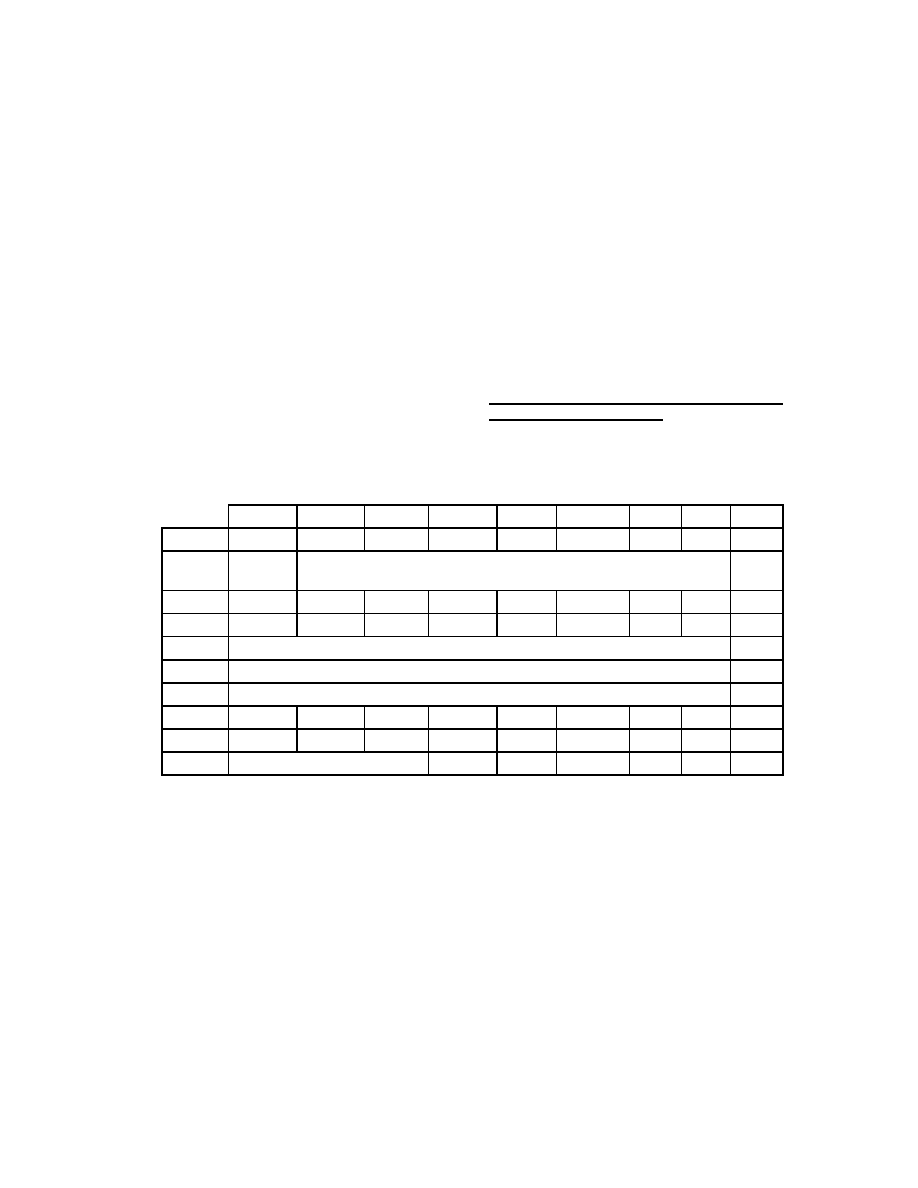
The bit map of the Extended Parallel Port
registers is:
D7
D6
D5
D4
D3
D2
D1
D0
Note
data
PD7
PD6
PD5
PD4
PD3
PD2
PD1
PD0
ecpAFifo
Addr/RL
E
Address or RLE field
2
dsr
nBusy
nAck
PError
Select
nFault
0
1
dcr
0
Direction
ackIntEn
SelectIn
nInit
autofd strobe
1
cFifo
Parallel Port Data FIFO
2
ecpDFifo
ECP Data FIFO
2
tFifo
Test FIFO
2
cnfgA
0
1
0
cnfgB
compress
intrValue
0
ecr
MODE
nErrIntrEn
dmaEn
serviceIntr
full
empty
Note 1: These registers are available in all modes.
Note 2: All FIFOs use one common 16 byte FIFO.
相关PDF资料 |
PDF描述 |
|---|---|
| 37C672 | ENHANCED SUPER I/O CONTROLLER WITH FAST IR |
| 37C67X | ENHANCED SUPER I/O CONTROLLER WITH FAST IR |
| 37C957FR | ULTRA I/O CONTROLLER FOR PORTABLE APPLICATIONS |
| 37FMA1-ABW31N | SPECIAL SWITCH-PIEZO SWITCH, SPST, MOMENTARY, 0.2A, 24VDC, PANEL MOUNT-THREADED |
| 37FML1-BEW31N | SPECIAL SWITCH-PIEZO SWITCH, SPST, MOMENTARY, 0.2A, 24VDC, PANEL MOUNT-THREADED |
相关代理商/技术参数 |
参数描述 |
|---|---|
| 37C672 | 制造商:SMSC 制造商全称:SMSC 功能描述:ENHANCED SUPER I/O CONTROLLER WITH FAST IR |
| 37C67X | 制造商:SMSC 制造商全称:SMSC 功能描述:ENHANCED SUPER I/O CONTROLLER WITH FAST IR |
| 37C-6BH-5-5 | 制造商:Birtcher Products 功能描述: |
| 37C72U-185 | 制造商:White-Rodgers 功能描述: |
| 37C73U-170 | 制造商:White-Rodgers 功能描述: |
发布紧急采购,3分钟左右您将得到回复。