- 您现在的位置:买卖IC网 > PDF目录1917 > DSP56303VL100B1 (Freescale Semiconductor)IC DSP 24BIT 100MHZ 196-BGA PDF资料下载
参数资料
| 型号: | DSP56303VL100B1 |
| 厂商: | Freescale Semiconductor |
| 文件页数: | 20/108页 |
| 文件大小: | 0K |
| 描述: | IC DSP 24BIT 100MHZ 196-BGA |
| 标准包装: | 630 |
| 系列: | DSP563xx |
| 类型: | 定点 |
| 接口: | 主机接口,SSI,SCI |
| 时钟速率: | 100MHz |
| 非易失内存: | ROM(576 B) |
| 芯片上RAM: | 24kB |
| 电压 - 输入/输出: | 3.30V |
| 电压 - 核心: | 3.30V |
| 工作温度: | -40°C ~ 100°C |
| 安装类型: | 表面贴装 |
| 封装/外壳: | 196-LBGA |
| 供应商设备封装: | 196-MAPBGA(15x15) |
| 包装: | 托盘 |
第1页第2页第3页第4页第5页第6页第7页第8页第9页第10页第11页第12页第13页第14页第15页第16页第17页第18页第19页当前第20页第21页第22页第23页第24页第25页第26页第27页第28页第29页第30页第31页第32页第33页第34页第35页第36页第37页第38页第39页第40页第41页第42页第43页第44页第45页第46页第47页第48页第49页第50页第51页第52页第53页第54页第55页第56页第57页第58页第59页第60页第61页第62页第63页第64页第65页第66页第67页第68页第69页第70页第71页第72页第73页第74页第75页第76页第77页第78页第79页第80页第81页第82页第83页第84页第85页第86页第87页第88页第89页第90页第91页第92页第93页第94页第95页第96页第97页第98页第99页第100页第101页第102页第103页第104页第105页第106页第107页第108页
Timers
DSP56303 Technical Data, Rev. 11
Freescale Semiconductor
1-15
1.11 Timers
The DSP56303 has three identical and independent timers. Each timer can use internal or external clocking and can
either interrupt the DSP56303 after a specified number of events (clocks) or signal an external device after
counting a specific number of internal events.
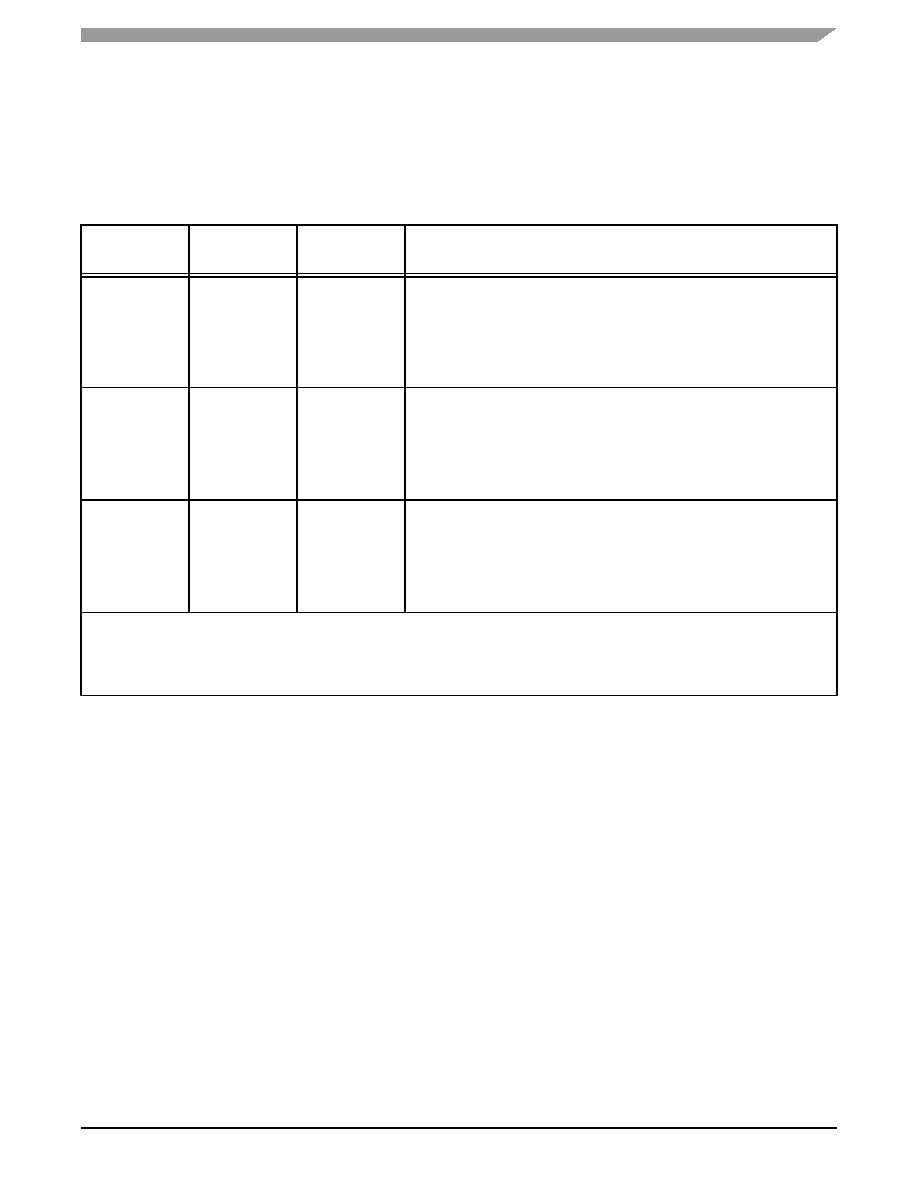
Table 1-15.
Triple Timer Signals
Signal Name
Type
State During
Reset1,2
Signal Description
TIO0
Input or Output
Ignored Input
Timer 0 Schmitt-Trigger Input/Output— When Timer 0 functions as an
external event counter or in measurement mode, TIO0 is used as input. When
Timer 0 functions in watchdog, timer, or pulse modulation mode, TIO0 is used
as output.
The default mode after reset is GPIO input. TIO0 can be changed to output or
configured as a timer I/O through the Timer 0 Control/Status Register (TCSR0).
TIO1
Input or Output
Ignored Input
Timer 1 Schmitt-Trigger Input/Output— When Timer 1 functions as an
external event counter or in measurement mode, TIO1 is used as input. When
Timer 1 functions in watchdog, timer, or pulse modulation mode, TIO1 is used
as output.
The default mode after reset is GPIO input. TIO1 can be changed to output or
configured as a timer I/O through the Timer 1 Control/Status Register (TCSR1).
TIO2
Input or Output
Ignored Input
Timer 2 Schmitt-Trigger Input/Output— When Timer 2 functions as an
external event counter or in measurement mode, TIO2 is used as input. When
Timer 2 functions in watchdog, timer, or pulse modulation mode, TIO2 is used
as output.
The default mode after reset is GPIO input. TIO2 can be changed to output or
configured as a timer I/O through the Timer 2 Control/Status Register (TCSR2).
Notes:
1.
In the Stop state, the signal maintains the last state as follows:
If the last state is input, the signal is an ignored input.
If the last state is output, the signal is tri-stated.
2.
The Wait processing state does not affect the signal state.
3.
All inputs are 5 V tolerant.
相关PDF资料 |
PDF描述 |
|---|---|
| DSP56311VF150B1 | IC DSP 24BIT 150MHZ 196-BGA |
| DSP56321VF200R2 | IC DSP 24BIT 200MHZ 196-BGA |
| DSP56852VFE | IC DSP 16BIT 120MHZ 81-MAPBGA |
| DSP56854FGE | IC DSP 16BIT 120MHZ 128-LQFP |
| DSP56855BUE | IC DSP 16BIT 120MHZ 100-LQFP |
相关代理商/技术参数 |
参数描述 |
|---|---|
| DSP56304GC66 | 制造商:未知厂家 制造商全称:未知厂家 功能描述:24-Bit Digital Signal Processor |
| DSP56304GC80 | 制造商:未知厂家 制造商全称:未知厂家 功能描述:24-Bit Digital Signal Processor |
| DSP56304PV66 | 制造商:未知厂家 制造商全称:未知厂家 功能描述:24-Bit Digital Signal Processor |
| DSP56304PV80 | 制造商:未知厂家 制造商全称:未知厂家 功能描述:24-Bit Digital Signal Processor |
| DSP56305DS | 制造商:未知厂家 制造商全称:未知厂家 功能描述:DSP56305 Single Chip Channel Codec Digital Signal Processor Data Sheet |
发布紧急采购,3分钟左右您将得到回复。