参数资料
| 型号: | XRT94L33IB-L |
| 厂商: | Exar Corporation |
| 文件页数: | 208/465页 |
| 文件大小: | 0K |
| 描述: | IC MAPPER DS3/E3/STS-1 504TBGA |
| 标准包装: | 24 |
| 应用: | 网络切换 |
| 接口: | 总线 |
| 电源电压: | 3.14 V ~ 3.47 V |
| 封装/外壳: | 504-LBGA |
| 供应商设备封装: | 504-TBGA(35x35) |
| 包装: | 托盘 |
| 安装类型: | 表面贴装 |
第1页第2页第3页第4页第5页第6页第7页第8页第9页第10页第11页第12页第13页第14页第15页第16页第17页第18页第19页第20页第21页第22页第23页第24页第25页第26页第27页第28页第29页第30页第31页第32页第33页第34页第35页第36页第37页第38页第39页第40页第41页第42页第43页第44页第45页第46页第47页第48页第49页第50页第51页第52页第53页第54页第55页第56页第57页第58页第59页第60页第61页第62页第63页第64页第65页第66页第67页第68页第69页第70页第71页第72页第73页第74页第75页第76页第77页第78页第79页第80页第81页第82页第83页第84页第85页第86页第87页第88页第89页第90页第91页第92页第93页第94页第95页第96页第97页第98页第99页第100页第101页第102页第103页第104页第105页第106页第107页第108页第109页第110页第111页第112页第113页第114页第115页第116页第117页第118页第119页第120页第121页第122页第123页第124页第125页第126页第127页第128页第129页第130页第131页第132页第133页第134页第135页第136页第137页第138页第139页第140页第141页第142页第143页第144页第145页第146页第147页第148页第149页第150页第151页第152页第153页第154页第155页第156页第157页第158页第159页第160页第161页第162页第163页第164页第165页第166页第167页第168页第169页第170页第171页第172页第173页第174页第175页第176页第177页第178页第179页第180页第181页第182页第183页第184页第185页第186页第187页第188页第189页第190页第191页第192页第193页第194页第195页第196页第197页第198页第199页第200页第201页第202页第203页第204页第205页第206页第207页当前第208页第209页第210页第211页第212页第213页第214页第215页第216页第217页第218页第219页第220页第221页第222页第223页第224页第225页第226页第227页第228页第229页第230页第231页第232页第233页第234页第235页第236页第237页第238页第239页第240页第241页第242页第243页第244页第245页第246页第247页第248页第249页第250页第251页第252页第253页第254页第255页第256页第257页第258页第259页第260页第261页第262页第263页第264页第265页第266页第267页第268页第269页第270页第271页第272页第273页第274页第275页第276页第277页第278页第279页第280页第281页第282页第283页第284页第285页第286页第287页第288页第289页第290页第291页第292页第293页第294页第295页第296页第297页第298页第299页第300页第301页第302页第303页第304页第305页第306页第307页第308页第309页第310页第311页第312页第313页第314页第315页第316页第317页第318页第319页第320页第321页第322页第323页第324页第325页第326页第327页第328页第329页第330页第331页第332页第333页第334页第335页第336页第337页第338页第339页第340页第341页第342页第343页第344页第345页第346页第347页第348页第349页第350页第351页第352页第353页第354页第355页第356页第357页第358页第359页第360页第361页第362页第363页第364页第365页第366页第367页第368页第369页第370页第371页第372页第373页第374页第375页第376页第377页第378页第379页第380页第381页第382页第383页第384页第385页第386页第387页第388页第389页第390页第391页第392页第393页第394页第395页第396页第397页第398页第399页第400页第401页第402页第403页第404页第405页第406页第407页第408页第409页第410页第411页第412页第413页第414页第415页第416页第417页第418页第419页第420页第421页第422页第423页第424页第425页第426页第427页第428页第429页第430页第431页第432页第433页第434页第435页第436页第437页第438页第439页第440页第441页第442页第443页第444页第445页第446页第447页第448页第449页第450页第451页第452页第453页第454页第455页第456页第457页第458页第459页第460页第461页第462页第463页第464页第465页
XRT94L33
xr
Rev.1.2.0.
3-CHANNEL DS3/E3/STS-1 TO STS-3/STM-1 MAPPER IC DATA SHEET
286
STEP 2 – Begin providing the values of the “outbound” Z3 byte to the “TxPOH_n” input port.
The procedure for applying the Z3 byte to the “TxPOH_n” input port is presented below.
Using the “TxPOH” Input Port to insert the Z3 byte value into the outbound STS-1 SPE data-stream
If the user intends to externally insert the Z3 byte into the outbound STS-1 SPE, via the “TxPOH_n” input port,
then they must design some external circuitry (which can be realized in an ASIC, FPGA or CPLD solution) to
do to the following.
Continuously sample the “TxPOHEnable_n” and the “TxPOHFrame_n” output pins upon the rising edge of
the “TxPOHClk_n” output clock signal.
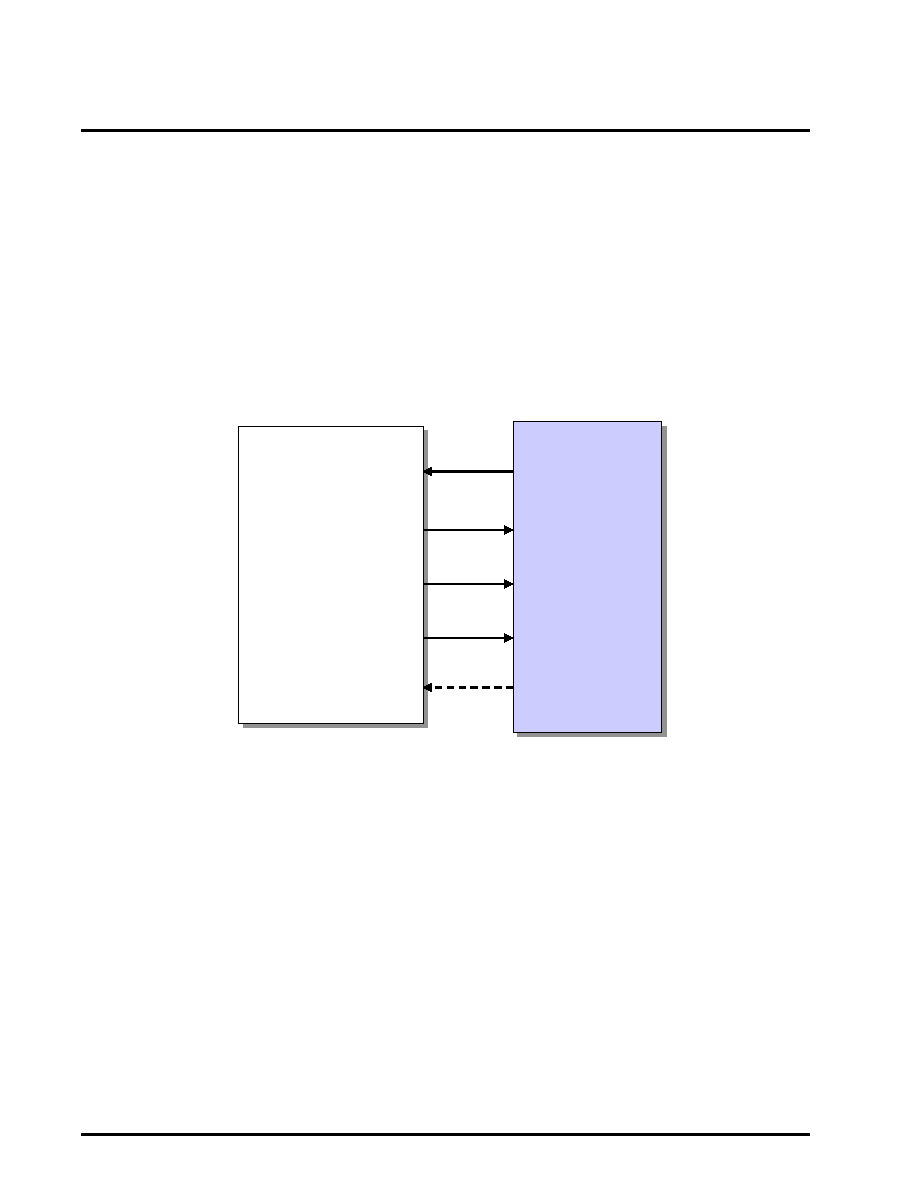
A simple illustration of this “external circuit” being interfaced to the “TxPOH Input Port” is presented below in
Figure 54 : A Simple Illustration of the “External Circuit” being interfaced to the “TxPOH Input Port”
TxPOH_n
TxPOHClk_n
TxPOHFrame_n
TxPOHEnable_n
TxPOHIns_n
XRT95L34 Device
External Circuit
TxPOHClk_IN
TxPOHFrame_IN
TxPOHData_OUT
TxPOHEnable_IN
TxPOH_INSERT
Note:
The “TxPOHIns_n” line (inFigure 54) is “dashed” because controlling this signal is not necessary if the user has
executed “STEP 1” above.
Whenever the “external circuit” samples both the “TxPOHEnable_n” and “TxPOHFrame_n” output pins
“high”, then it should enter a “WAIT STATE” (e.g., where it will wait for 48 periods of “TxPOHClk_n” to
elapse). Afterwards, the external circuit should exit this “WAIT STATE” and then place the very first bit (e.g.,
the most significant bit) of the “outbound” Z3 byte onto the “TxPOH_n” input pin, upon the very next falling
edge of “TxPOHClk_n”. This data bit will be sampled and latched into the “Transmit SONET POH Processor”
block circuitry, upon the very next rising edge of “TxPOHClk_n”.
Note:
This “WAIT STATE” period is necessary because the Z3 byte is the seventh byte within the POH.
Afterwards, the “external circuit” should serially place the remaining seven bits (of the Z3 byte) onto the
“TxPOH_n” input pin, upon each of the next seven falling edges of “TxPOHClk_n”.
The “external circuit” should then revert back to continuously sampling the states of the “TxPOHEnable_n”
and “TxPOHFrame_n” output pins and repeat the above-mentioned process.
相关PDF资料 |
PDF描述 |
|---|---|
| XRT94L43IB-F | IC MAPPER SONET/SDH OC12 516BGA |
| XS1-G02B-FB144-I4 | IC MCU 32BIT 16KB OTP 144FBGA |
| XTR114U/2K5 | IC 4-20MA I-TRANSMITTER 14-SOIC |
| ZXHF5000JB24TC | IC SWITCH QUAD 2X1 24QFN |
| 3341-56 | IC PLL INTEGER-N 3GHZ 20QFN |
相关代理商/技术参数 |
参数描述 |
|---|---|
| XRT94L43 | 制造商:EXAR 制造商全称:EXAR 功能描述:SONET/SDH STS-12/STM-4 TO E3/DS3/STS-1 MAPPER/DEMAPPER |
| XRT94L43_06 | 制造商:EXAR 制造商全称:EXAR 功能描述:SONET/SDH OC-12 TO 12XDS3/E3 MAPPER |
| XRT94L43A | 制造商:EXAR 制造商全称:EXAR 功能描述:SONET/SDH OC-12 TO 12XDS3/E3 MAPPER |
| XRT94L43ES-L03 | 功能描述:界面开发工具 Eval System for XRT94L43 Series RoHS:否 制造商:Bourns 产品:Evaluation Boards 类型:RS-485 工具用于评估:ADM3485E 接口类型:RS-485 工作电源电压:3.3 V |
| XRT94L43ES-LC03 | 功能描述:时钟合成器/抖动清除器 OC12-12XDS3MAPPER SCORPION 4x T73LC03A RoHS:否 制造商:Skyworks Solutions, Inc. 输出端数量: 输出电平: 最大输出频率: 输入电平: 最大输入频率:6.1 GHz 电源电压-最大:3.3 V 电源电压-最小:2.7 V 封装 / 箱体:TSSOP-28 封装:Reel |
发布紧急采购,3分钟左右您将得到回复。