- 您现在的位置:买卖IC网 > PDF目录18765 > MRF89XAT-I/MQ (Microchip Technology)RF ISM BAND TXRX 32 QFN PDF资料下载
参数资料
| 型号: | MRF89XAT-I/MQ |
| 厂商: | Microchip Technology |
| 文件页数: | 101/140页 |
| 文件大小: | 0K |
| 描述: | RF ISM BAND TXRX 32 QFN |
| 标准包装: | 1 |
| 频率: | 863MHz ~ 870MHz,902MHz ~ 928MHz,950MHz ~ 960MHz |
| 数据传输率 - 最大: | 200kbps |
| 调制或协议: | FSK,OOK |
| 应用: | ISM |
| 功率 - 输出: | 12.5dBm |
| 灵敏度: | -113dBm |
| 电源电压: | 2.1 V ~ 3.6 V |
| 电流 - 接收: | 3mA |
| 电流 - 传输: | 25mA |
| 数据接口: | PCB,表面贴装 |
| 存储容量: | * |
| 天线连接器: | PCB,表面贴装 |
| 工作温度: | -40°C ~ 85°C |
| 封装/外壳: | 32-WFQFN 裸露焊盘 |
| 包装: | 标准包装 |
| 其它名称: | MRF89XAT-I/MQDKR |
第1页第2页第3页第4页第5页第6页第7页第8页第9页第10页第11页第12页第13页第14页第15页第16页第17页第18页第19页第20页第21页第22页第23页第24页第25页第26页第27页第28页第29页第30页第31页第32页第33页第34页第35页第36页第37页第38页第39页第40页第41页第42页第43页第44页第45页第46页第47页第48页第49页第50页第51页第52页第53页第54页第55页第56页第57页第58页第59页第60页第61页第62页第63页第64页第65页第66页第67页第68页第69页第70页第71页第72页第73页第74页第75页第76页第77页第78页第79页第80页第81页第82页第83页第84页第85页第86页第87页第88页第89页第90页第91页第92页第93页第94页第95页第96页第97页第98页第99页第100页当前第101页第102页第103页第104页第105页第106页第107页第108页第109页第110页第111页第112页第113页第114页第115页第116页第117页第118页第119页第120页第121页第122页第123页第124页第125页第126页第127页第128页第129页第130页第131页第132页第133页第134页第135页第136页第137页第138页第139页第140页
MRF89XA
4.8 General PCB Layout Design
The following guidelines can be used to assist in high-
frequency PCB layout design.
The printed circuit board is usually comprised of two or
four basic FR4 layers.
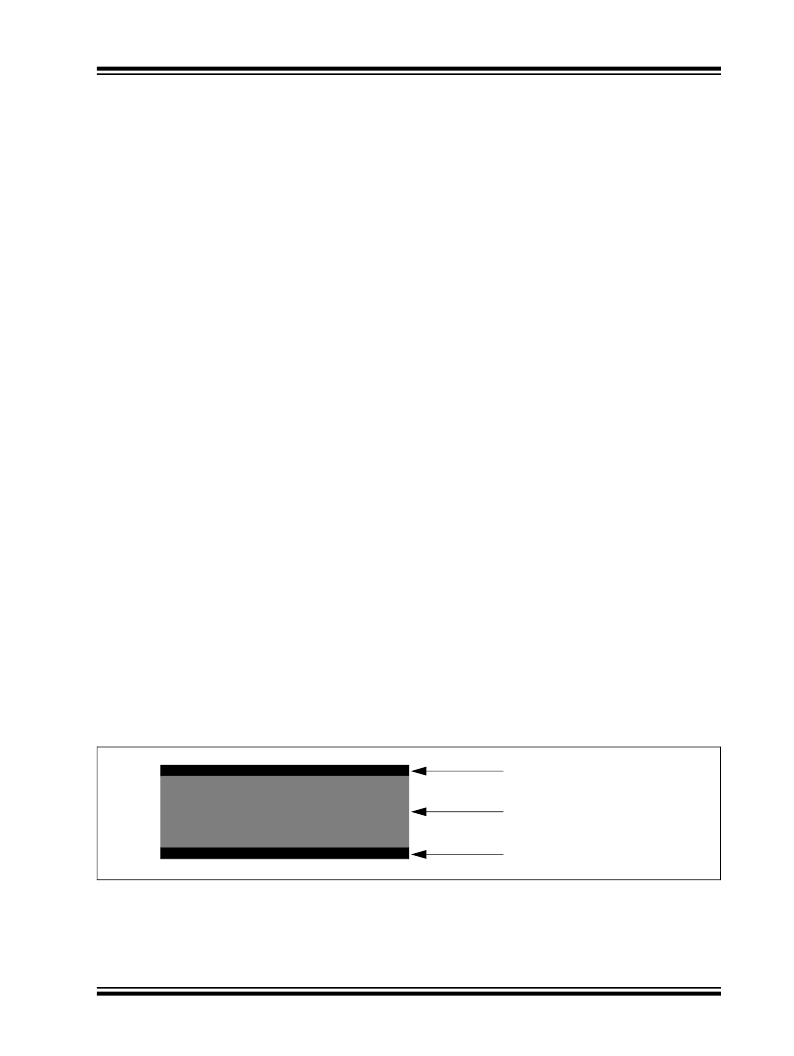
The two-layer printed circuit board has mixed signal/
power/RF and common ground routed in both the lay-
ers (see Figure 4-8 ).
The four-layer printed circuit board (see Figure 4-9 ) is
comprised of the following layers:
? Signal layout
? Thorough decoupling on each power pin is
beneficial for reducing in-band transceiver noise,
particularly when this noise degrades performance.
Usually, low value caps (27-47 pF) combined with
large value caps (100 nF) will cover a large
spectrum of frequency.
? Passive component (inductors) should be in the
high-frequency category and the Self-Resonant
Frequency (SRF) should be at least two times
higher than the operating frequency.
? The additional trace length affects the crystal
oscillator by adding parasitic capacitance to the
overall load of the crystal. To minimize this, place
?
?
RF ground
Power line routing
the crystal as close as possible to the RF device.
? Setting short and direct connections between the
? Common ground
The following guidelines explain the requirements of
the previously mentioned layers:
? It is important to keep the original PCB thickness,
because any change will affect antenna perfor-
mance (see total thickness of dielectric) or
microstrip lines’ characteristic impedance.
? For good transmit and receive performance, the
trace lengths at the RF pins must be kept as short
as possible. Using small, surface mount compo-
nents (in 0402/0603 package) yields good perfor-
mance and keeps the RF circuit small. RF
connections should be short and direct.
? Except for the antenna layout, avoid sharp corners
because they can act as an antenna. Round corners
will eliminate possible future EMI problems.
? Digital lines are prone to be very noisy when han-
dling periodic waveforms and fast clock/switching
rates. Avoid RF signal layout close to any of the
digital lines.
? A VIA filled ground patch underneath the IC
transceiver is mandatory.
? The power supply must be distributed to each pin in
a star topology, and low-ESR capacitors must be
placed at each pin for proper decoupling noise.
components on board minimizes the effects of
“frequency pulling” that might be introduced by stray
capacitance. It even allows the internal load capaci-
tance of the chip to be more effective in properly
loading the crystal oscillator circuit.
? Long run tracks of clock signal may radiate and
cause interference. This can degrade receiver per-
formance and add harmonics or unwanted
modulation to the transmitter.
? Keep clock connections as short as possible and
surround the clock trace with an adjacent ground
plane pour. Pouring helps in reducing any radiation
or crosstalk due to long run traces of the clock
signal.
? Low value decoupling capacitors, typically 0.01-0.1
μF, should be placed for V DD of the chip and for bias
points of the RF circuit.
? High value decoupling capacitors, typically 2.2-10
μF, should be placed at the point where power is
applied to the PCB.
? Power supply bypassing is necessary. Poor bypass-
ing contributes to conducted interference, which can
cause noise and spurious signals to couple into the
RF sections, significantly reducing the performance.
FIGURE 4-8:
TWO BASIC COPPER FR4 LAYERS
Signal/Power/RF and
Common Ground
Dielectric Constant = 4.5
Signal/Power/RF and
Common Ground
? 2010–2011 Microchip Technology Inc.
Preliminary
DS70622C-page 101
相关PDF资料 |
PDF描述 |
|---|---|
| 241-5-12L | XFRMR PWR 115V 12.6VCT 1A LEADS |
| DPC-40-250 | XFRMR PWR 115/230V 40VCT 250MA |
| ST-5-56 | XFRMR PWR 115V 28V 440MA 12VA |
| 6221 | TIP STAIN-STEEL SHARP-PT .06"DMM |
| ST-5-48 | XFRMR PWR 115V 24V 500MA 12VA |
相关代理商/技术参数 |
参数描述 |
|---|---|
| MRF8HP21080HR3 | 功能描述:射频MOSFET电源晶体管 HV8 2.1GHZ 160W NI780H-4 RoHS:否 制造商:Freescale Semiconductor 配置:Single 晶体管极性: 频率:1800 MHz to 2000 MHz 增益:27 dB 输出功率:100 W 汲极/源极击穿电压: 漏极连续电流: 闸/源击穿电压: 最大工作温度: 封装 / 箱体:NI-780-4 封装:Tray |
| MRF8HP21080HR5 | 功能描述:射频MOSFET电源晶体管 HV8 2.1GHZ 160W NI780H-4 RoHS:否 制造商:Freescale Semiconductor 配置:Single 晶体管极性: 频率:1800 MHz to 2000 MHz 增益:27 dB 输出功率:100 W 汲极/源极击穿电压: 漏极连续电流: 闸/源击穿电压: 最大工作温度: 封装 / 箱体:NI-780-4 封装:Tray |
| MRF8HP21080HSR3 | 功能描述:射频MOSFET电源晶体管 HV8 2.1GHZ 160W NI780S-4 RoHS:否 制造商:Freescale Semiconductor 配置:Single 晶体管极性: 频率:1800 MHz to 2000 MHz 增益:27 dB 输出功率:100 W 汲极/源极击穿电压: 漏极连续电流: 闸/源击穿电压: 最大工作温度: 封装 / 箱体:NI-780-4 封装:Tray |
| MRF8HP21080HSR5 | 功能描述:射频MOSFET电源晶体管 HV8 2.1GHZ 160W NI780S-4 RoHS:否 制造商:Freescale Semiconductor 配置:Single 晶体管极性: 频率:1800 MHz to 2000 MHz 增益:27 dB 输出功率:100 W 汲极/源极击穿电压: 漏极连续电流: 闸/源击穿电压: 最大工作温度: 封装 / 箱体:NI-780-4 封装:Tray |
| MRF8HP21130HR3 | 功能描述:射频MOSFET电源晶体管 HV8 2.1GHZ 130W NI780-4 RoHS:否 制造商:Freescale Semiconductor 配置:Single 晶体管极性: 频率:1800 MHz to 2000 MHz 增益:27 dB 输出功率:100 W 汲极/源极击穿电压: 漏极连续电流: 闸/源击穿电压: 最大工作温度: 封装 / 箱体:NI-780-4 封装:Tray |
发布紧急采购,3分钟左右您将得到回复。